























home | metro silicon valley index | movies | current reviews | dvd review
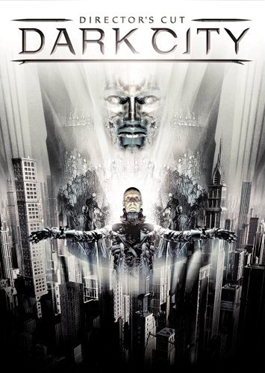
Dark City: Director's Cut
One disc; New Line Home Video; $19.98
By Matthew Craggs
Thanks to George Lucas and Steven Spielberg, we are rightfully afraid that million-dollar special effects and walkie-talkies will destroy the movies we once held dear. For this reason, it's easy to dismiss the rerelease of any sci-fi film, but the director's cut of Dark City provides us with hope that not all is lost. After a decade, the noir fairy tale is still as imaginative as ever. The most notable change made by director Alex Proyas is the deletion of the expositional narrative that originally accompanied the opening sequence. This effective change forces the audience to figure out the movie's mystery along with John Murdoch (Rufus Sewell), who begins the film with amnesia and a dead hooker on his hands. On the run, Murdoch learns that aliens, the Strangers, are manipulating the city and its inhabitants in an effort to learn the secret to humanity's individuality. Left intact is the biggest appeal of the film, a visually unique world that recalls a retro American metropolis as seen through the eyes of the German surrealists who created Nosferatu and The Cabinet of Dr. Caligari. Jennifer Connelly's classic beauty and William Hurt's haunted detective oddly fit into their surroundings while the Strangers, especially Richard O'Brien (Rocky Horror Picture Show), are out of place just enough to be exceedingly creepy. Proyas takes advantage of his director's cut to further explore whether we're the sum of our past and memories, or if we die the same person we are born as. With documentaries, three audio commentaries and 11 minutes of new footage, one added scene sticks out above the rest. Emma Murdoch (Connelly) reports her husband's disappearance to Inspector Bumstead (Hurt) but while doing so she fidgets with her wedding ring, causing him to be skeptical that she has been married four years. Bumstead is actually noticing the truth-the Strangers have implanted that memory in Emma. Here, we see Proyas weighing in on what makes us who we are. Despite some unnecessary scene rearrangement and a touch of new CG, it's an improvement on a film that's best described as a thinking-man's Matrix.
Click Here to Talk About Movies at Metro's New Blog
Send a letter to the editor about this story.
 |
 |
 |
 |
 |