
Show Goes On
After cutting Cinequest short last year, the annual film festival is back online Read More


After cutting Cinequest short last year, the annual film festival is back online Read More

By the second week, those fears were confirmed as the organizers of the festival in San Jose and Redwood City pulled the plug, Covid-19 cases increased and public health officials forbade gatherings. A year later, the festival returns, this time fully virtual, from March 20 to 30 with 199 films and shows from 55 countries, most of which will be available to stream throughout the festival. Another 13 "Spotlight" events will punctuate the festival with Zoom Q&As and "red carpet" interviews with filmmakers and actors and peeks at rough cuts. » Read More
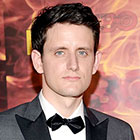
There comes a time in every reporter's career when an actor must be interviewed because they've directed a short film. These moments are fraught with anxiety because the films are often vanity projects created for the sake of showcasing some nascent talent the actor believes has been overlooked, without ever questioning why. I'm happy to report this is decidedly not the case with Zach Woods' debut directorial effort, David, a hilarious, humanistic portrait of psychic healing that should be prescribed viewing for the sake of global mental health. » Read More

You wanted a staycation, you said. You need to catch up on streaming, you said. Well, the magic elf that lives in the sky certainly gave you what you wanted. During this period of house arrest, Netflix's cornucopia continues to spill narcos, zombies and real-life crime. Take a hard pass in favor of the adventures of a Suffolk sheep. A Shaun the Sheep Movie: Farmageddon cites ET, Men in Black, Doctor Who and Close Encounters of the Third Kind. The space invader is about a yard high, a sort of mischievous finger puppet shaped critter with tentacles. Topped with an azure puppyish head, he's a deep-space cousin to Peanuts' Snoopy. Shaun helps him phone home, while warding off trouble from the Ministry of Alien Detection, and the authoritarian » Read More
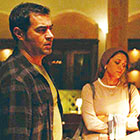
Given the current political crises, it's hard to see films by the new generation of directors following Jafar Panahi (This Is Not a Film), Mohsen Makhmalbaf (Kandahar) or Abbas Kiarostami (A Taste of Cherry, Certified Copy). Bretow notes, "We were surprised to find out that many American moviegoers weren't familiar with the renown of Iran's national cinema ... With The Night, we wanted to make something that honored that authentic humanity. Like the Iranian cinema that has come before it, The Night doesn't wear all of its secrets on the surface. We set out to create a film layered in meaning." » Read More
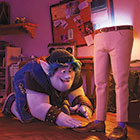
The closest thing Disney and Pixar have done to a Richard Linklater movie, the reliably appealing Onward is a study of sibling love carried out in an everyday elvish suburb. Technology shoved aside magic years ago. Middle Earth has gone downhill, with the high-tension power lines marching over the landscape of New Mushroomton. Burger Shire has a sign: "Now Serving Second Breakfast." Diseased-looking unicorns are fighting over the trash cans, hissing like racoons. It's about 1975, if there's a way to account for the cellphones: Big burly Barley (Chris Pratt does the voice) with his attempted beard, and his beat up van with Pegasus on it, complicates the life of his little brother Ian (Tom Holland) who has just turned 16. Barley has a » Read More
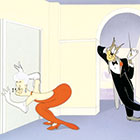
This derby-wearing black cat lends his services to a poor abused kitten tormented by a sniggering bulldog. When the black cat crosses its path, the dog is crowned by a falling flower pot, plummeting from some unseen height. A plausible-enough accident. Once the principle has been demonstrated, anything can come out of the sky: a horse, a bus, a ton of bricks. Bugs Bunny was a prankster. Avery's Screwy Squirrel is an out-and-out bastard. There are four Screwy cartoons here, including the character's outlandishly funny 1944 debut, Screwball Squirrel. The red-nosed Screwy ambushes a Disneyfied cutesy squirrel and hijacks the cartoon, getting on the phone and challenging a meek dog called Meathead, who talks like Jimmy Stewart. Years before » Read More

But the daughter refuses to pose. The finished portrait will be sent to a potential husband in Milan who wants a good look at this convent-raised girl, and Heloise doesn't want to be auctioned off. Heloise also seethes because her elder sister fell or jumped from a seaside cliff, under circumstances that get cloudier the more they're explained. The seduction between artist and model is slow and tantalizing, since Marianne must covertly sketch the girl without being found out. Heloise is a tough subject even when she holds still. It's a task to get past her look of crossness, the creases of sorrow under her eyes. As the portrait builds, it becomes one of those paintings where the love between painter and model is unignorable. » Read More
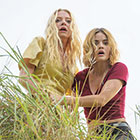
The people who tell you, "There are more tears shed over answered prayers," aren't going to answer your prayers anyway. I was a non-TV-watching snob during Fantasy Island's six-year broadcast run, as it impressed upon its viewers the importance of not asking for trouble by wishing for anything. But who ever really gets away from television? Had I known that Satan (Roddy McDowell) turned up a couple of times during the series, I might have tuned into this long-running annuity for that richly-syllabled Ricardo Montalban. » Read More

According to the Akira Kurosawa-scholar Donald Richie, when the legendary Japanese director was asked why his 1951 Rashomon was so popular, he'd reply, "Well, you see ... it's about this rape ..." In short, the ticket-selling shock-value qualities of this act of violence are self-explanatory. We hear evidence, presented straight to the camera. The testifiers sit in the lotus position in the sandy courtyard of some royal authority, whom we neither see nor hear. The accused bandit Tajomaru (Toshiro Mifune) has been captured. He's tied up and bored, squinting at the sky, looking for signs of rain. » Read More

Time is always short, and the chance to match up a good dinner with a good movie appeals to overbooked valley-dwellers. The Pruneyard Cinema's Culinary Cuisine series, running through the spring, began with last week's pre-Valentine's Day event matching Casablanca with chicken and couscous, and no-host cocktails from the Cedar Room. Jack NyBlom is an exhibitor of decades-long experience who is one of the partners in Campbell's Pruneyard Cinemas. Now that it's been open a year, NyBlom says Pruneyard regulars are making it a kind of club, with trivia nights and other events. "It's been really catching on, and people love it. They want to see these films the way we're presenting them." » Read More

Fear not being too old or too male for Birds of Prey. Call it upcycled, repurposed or just plain ripped-off, but it's made out of familiar and gaudy stuff. A climactic battle in an abandoned fun house with slides, spinning platforms and pop-art murals looks like the most expensive episode ever of the 1960s Batman TV-show ever. The soundtrack includes tunes that could be in a dad's record collection. Spike Lee star Rosie Perez is Lt. Montoya, whose tough-cop dialogue catalyzes the Miami Vice references just as thoroughly as the villain's pink sports coat and French-cut T-shirt. There's plenty of 1990s backassward Tarantino storytelling: "Oh, I forgot to mention this important part of the story, let's watch everything we just saw rewinded » Read More

In flashbacks we see how Mickey almost sealed the deal with a gay Jewish-American millionaire (a supercilious Jeremy Strong); complications ensue when his previously airtight business springs a leak. A crew of thugs raids one of his subterranean weed-farms, then viralize a "fight-porn" video of their battle with the guards. And the lack of serious bad bastards shows once again. This gang, dressed in plaid tracksuits that must have cost a lot more than they look, are called "The Toddlers." And they wouldn't put the scare into the hero of a YA novel. Among them is real-life rapper Bugzy Malone, who, let the record show, took his stage name from a movie about kid gangsters shooting each other with whipped cream. » Read More

The viewer is going to need that laugh. Ireland's "The Bird and the Whale" is the most dire--quite pretty but too sad to describe. The oddity that is the stop-motion animated "Henrietta Bulkowski" has Mad Men's Christina Hendricks doing the voice of a hunchbacked woman of the 1930s who longs to be a pilot. She's first impeded, then helped, by a security guard (Chris Cooper). The pallid vinyl faces and the downbeat story's settings look like artist Michael McMillen's miniatures, especially in the rusty propeller plane Henrietta hammers together from junkyard wreckage. But the narrator (Ann Dowd) apprises us of both meaning and morals: "Just like that, these lost souls found each other." The talk is all the more redundant given how much » Read More
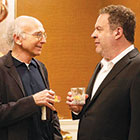
Once David had the gall to cast himself as a latter-day Robert F. Kennedy, quoting the martyr: "I saw wrong and tried to right it." "Wrongs righted" this season include 1: Pledging to drop a friend who gets cancer, because who needs that in their life. 2: Trying to close down his old nemesis "Mocha Joe" for serving lukewarm coffee on wobbly tables. 3: Getting sued for sexual harassment, mainly because his friend Jeff (Jeff Garlin) looks a bit like Harvey Weinstein. 4: Giving Jeff's gorgon of a wife, Susie (Susie Essman), a giant birthday portrait where she looked, as usual, like a Roman empress about to throw a slave to the tigers. Also, Larry has the inspiration to wear a red MAGA dunce cap as pest-repellent in liberal LA. Like every » Read More

Gallant and thrilling, The Aeronauts bypasses the problem of telling an adventure story about Victorians with large beards by making a romantic fiction about two balloon travelers. James Glaisher (Eddie Redmayne, in his best performance) is a guarded and scorned London scientist in 1862. An entire auditorium full of beards mocks him for his belief that studying the clouds will give man the ability to predict the weather. Thus, he attempts to break the record for highest ascent, to study the sky with a valise full of gauges and brass instruments. » Read More

Surveillance shows that some 1,600 British troops have advanced to the edge of a German trap, and the unaware English are poised to charge at dawn. Horribly urgent as this is, the warning seemingly can't be delivered by plane, and the telegraph lines have been cut by the Kaiser's soldiers. Delivering the message via a pair of runners is a mad plan, but their commanding officer (Colin Firth) recites Kipling to steady the two corporals' nerves: "Down to Gehenna or up to the Throne ..." George Orwell cited the unspoken other half of that couplet as proof of how important a cliche can be: "Sooner or later you will have occasion to feel that 'he travels the fastest who travels alone,' and there the thought is, readymade and, as it were, waiting » Read More

He's Howie, a terminal hustler with colossal gambling debts. He's also an NYC Diamond District salesman, who caters to the kind of thug-life clientele whose quarrel-prone, armed entourages would scare off most dealers. The more top-drawer names in hoops and hip-hop are led to Howie by his pilot fish (Lakeith Stanfield), where they're beguiled by watches that cost 20 grand, and diamond-studded trinkets such as a miniature Furby whose eyes swivel. Through shifty means, Howie acquires the opal we see in the title shot: a million-dollar score, obtained from exploited Ethiopean Jewish miners. In a moment of chatty foolhardiness Howie shows the opal to Boston Celtics star Kevin Garnett (playing himself). Garnett wants it and takes it, no matter » Read More
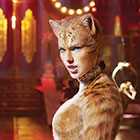
The soundtrack is true to its cheesy roots (tinny synthesizers and wah-wah pedals) serving the original cast album LP so many times you could see daylight between the grooves. The numbers are endless but the contest is fixed—the judge (Dame Judi Dench, beaming like a Teletubby) is a sucker for sad-sack cases such as Grizabella (Jennifer Hudson), who sings "Memory." This show-stopper, sadly, fails to stop the show. It has some of the pungency of the operatic arias that Webber reverse-engineered when writing it. As performed, it's deluxe bathos, surfing waves of tears and snot. Maybe Hudson's just allergic to cat dander. The number surpasses even the ghastliness of Anne Hathaway's similarly wet "I Dreamed a Dream" in Cats director's Tom » Read More

This year's best movies were heavy on stories of the immured (Parasite) and the entrenched (1917). In 2019, even Captain America said, to hell with this, I'm heading for the past. In Jordan Peele's eerie parable Us, America isn't just rich and poor, but the Influencers and the Influenced. His story of the hordes in their government-funded version of Plato's allegorical cave isn't easily picked apart. Yet it does merit space next to the business of the grateful, kowtowing subterranean lodger in Bong Joon-ho's uproarious Parasite--a movie composed with a perfection that rivals Hitchcock. Bong's film takes place in such a complete Yankee colony that there is little to be changed if they must to do an American remake. (Shoot it in Houston, » Read More

He's resurrected and needs to be snuffed. Thus, we know where this movie will end. Him and the final order (a football stadium full of hooded faceless cheerers-on) hide on a grim, bad planet, punctuated by streaks of blue lightning. It's a Sith stronghold that can only be found with a triangular widget, which in turn can only be found with the help of an inscription on a blade, written in the dread tongue of Mordor (actually Sithese), which C3P0 is forbidden to utter. And we know that the last of the Jedi, the one-named Rey (Daisy Ridley--sometimes beautifully fierce, sometimes blandly intrepid) must be the spearhead. » Read More

Despite the uprising that chased these grifters to Hawaii, it's been a tough fight for opponents of the Marcoses. The country's current president, Rodrigo Duterte, has publicly joked about the Marcos money that helped finance his rise. It's a trick of politics in the Philippines that the vice president is elected separately, ensuring a divided executive branch. Bongbong lost the last VP election to Leni Robredo, but he's challenging the election in a court stacked by Marcos sympathizers. Just as they do in America, pessimists insist that the game is over already. » Read More
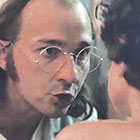
Once, he was a 12-year-old in an LA motel beside the railroad tracks. He shared a room with his hectoring father, James (played by LaBeouf himself), who young Otis paid to be something between a personal assistant and a manager. James is a motorcycle-riding combat vet and ex-con—he did time for a sex offense he was too drunk to recall. Now he's posing as a laid-back hippie in friendly-looking oversized eyeglasses. Four years in AA has done nothing for James' King Kong-sized temper. He's particularly pissed at his son's success. Otis gets movie-of-the week roles; James never made it bigger than being an Oklahoma rodeo clown with a novelty act involving a live chicken. The dad never misses a chance to humiliate his son, to mock his tiny » Read More

Baumbach previously directed The Squid and the Whale, about the tumult between a divorced pair (Laura Linney, Jeff Daniels); if there are similar autobiographical elements here, it proves we cannot learn from our parents' mistakes. In voiceover, Nicole (Scarlett Johansson) is reading a note about all the things she loves about her husband--the way he came out of a troubled Midwestern background and became "more New Yorker than New Yorkers," Charlie is a theatrical director, a magnet for talent... but this apparent love note was composed as part of a counselling program carried out just before the divorce. Now the two are fuming in the office of an overly- jeweled male therapist who displays books with titles like Why? and Woe. The idea is » Read More

Middling, but not without surprises, Knives Out is Rian Johnson's mystery about a group of greedy heirs in ugly holiday sweaters. They're the descendents of writer Harlan Thrombey (Christopher Plummer), author of The Menagerie Tragedy Trilogy and other best-selling bafflers. The morning after his 85th birthday party, the old man is found with his throat cut in an apparent suicide. The deceased was no stranger to the macabre. "He basically lives on a Clue board," says the investigating Lt. Elliott (Lakeith Stanfield of Sorry to Bother You and Atlanta); it's a turreted Victorian manor floating in a sea of dead leaves, with hidden entryways, creaky floorboards and sinister doodads galore. In a prominent place is a lifesize jolly-sailor dummy » Read More

There are technicians who do things as deceptively simple as record the wind, water or crowds. And there are other sound designers who create the effects. Ben Burtt, for example, started the work on the original Star Wars a year before principal photography began. George Lucas asked Burtt what noise a wookie makes; Burtt found it by recording the eloquent groans of a hungry but docile bear. Decades before, Murray Spivak found roaring voice of the original King Kong by slowing down a recording tigers at the Selig Zoo. And Cece Hall, supervising sound editor on Top Gun, amped up what she called the "wimpy" sounds of actual Navy jets by mixing in a tiger's bellow. » Read More
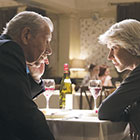
Aging performers can be sad to watch. Right when they should be doing the best work of their careers, they're playing wise codgers and lending their years of integrity to luxury car commercial voiceovers. Happily, Bill Condon's The Good Liar rejoices in old age's boundless capacity for treachery--a senior citizen's dirty avidity for just one more piece of pie. On the typewritten titles McKellen (Ian) and Mirren (Helen) get last name credits before their first names bleed up through the paper. Do they really need first names at this stage? » Read More
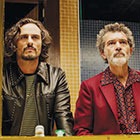
In his new film, Pain and Glory, a 70-year-old Pedro Almodovar looks back on his life; the Spanish director's surrogate (Antonio Banderas) is named "Salvador Mallo," sort of an anagram. He's tormented by maladies. None are lethal, though each one is enough to dissolve his concentration. He lays on his couch, being tended by his P.A., Mercedes (Nora Navas) whose main job is answering "no" to all requests. Fragments of projects emerge and sink back into oblivion: why write if you don't have the physical ability to direct? » Read More

It helps to know the original anyway. Both the 1986 graphic novel and the 2009 film it inspired revolve around a group of forcibly retired masked heroes who learn that one of their number was thrown out a high window. A Krishna-blue atomic superman known as Dr. Manhattan (as in "the Manhattan Project") is key to the investigation. His presence assured American supremacy in the world and helped Richard Nixon ease into his fourth term. But he's slowly becoming a deity, uninterested in human affairs. He vanishes, and nuclear war with the USSR looms. » Read More

In Two-Spirit Powwow Emmy-winning producer and Santa Clara University alumnus Rick Bacigalupi profiles the Bay Area American Indian Two-Spirit (BAAIT) gathering at Fort Mason, which anticipates about 5,000 attendees in February. The interviews here include Sheldon Raymore, of the Cheyenne River Lakota Nation, who describes his mother's reaction to his coming out: first rejection, then, years later, acceptance. The facially tattooed Tongva-Ajachmen L. Frank Manriquez is the first woman to become the Powow's emcee. » Read More
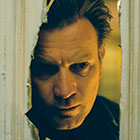
The lovely and malign Rose (Rebecca Ferguson) is kind of a witch, kind of a vampire. Though her age and exact backstory are vague, she might have become whatever she is now about the time Guns and Roses' Appetite for Destruction came out. The undead are always a little unfashionable in their dress. King's gift is rooting horror in everyday evil: the friendly stranger who beguiles a child and vanishes them forever, the temptation to destruction being as simple as that glass of whiskey you must not drink. The boy casualty of the Overlook Hotel, Danny (Ewan McGregor, at his best) grew up to be a mean alcoholic, just like his late dad, Jack. Danny floats into a small town in New Hampshire and is bailed out by a good-guy municipal worker (Cliff » Read More

Some people are going to hate Taika Waititi's Jojo Rabbit like they haven't hated anything since Life is Beautiful. Understandably, some will argue that Nazis are never funny under any circumstances, no matter what ridiculous figures they cut with their rites, their idiot prejudices and their too-cool Hugo Boss uniforms. Mel Brooks, who dodged German fire at the Battle of the Bulge, was always certain Nazis make for comedy gold. Even in these nervous times, can't we accept Brooks' judgement? » Read More

In January 2018, the New York Times reported that the president, seeking an Attorney General who'd protect him, shouted "Where's my Roy Cohn?" Trump meant the venomous, unprincipled and ultimately disbarred lawyer Cohn, his mentor in so many things. Where's My Roy Cohn? examines Cohn's duplicitous life in interviews with surviving cousins, legal partners, a former lover, the one and only (thank God) Roger Stone, and gossip columnist Liz Smith. Hold your nose! Those who prefer their villains disfigured will note that Cohn's own schnoz was marred by botched plastic surgery, making him look like some minor Star Trek: TNG alien. » Read More
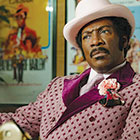
An unusally off-beat "let's put on a show" of a movie, Dolemite is My Name is a dirty, funny ensemble comedy about psychotronic film. Director Craig Brewer (Hustle & Flow) stars Eddie Murphy as a warm and likable Rudy Ray Moore, an inept comedian of the funk era who dreams of being a bad-ass martial arts star. Moore is another unhappy would-be performer in 1970s LA. He has the inspiration to tape-record the winos hanging around the record store he haunts, rhyming their tall tales of might. With the aid of friends and hard work, Moore turns an abandoned Central Avenue hotel into a film studio. He recruits a group of friends to make cinema out of the tale of Dolemite, giving this mythical hero an army of kung fu babes, on a mission to wipe » Read More

A father won't read his daughter the story of Little Red Riding Hood for a good reason... He once lived in a bad Vallejo apartment just one deadbolt away from the street, and he knew Xiana Fairchild, a little girl who was one more victim of the wolves out there. Jamie Dewolf does the true-story narration. Dewolf is a slam poet, and a performer with the Suicide Kings. The intimacy of the midnight images of street people and weeping children fight Dewolf's big, made-for-the-stage performance: audience applause snaps us out of the fearful world Valerie Barnhart conjures, with her black on black oil pastel drawings and cutouts. It's a gut punch, but it might have had even more power if Dewolf had rerecorded his tale in the tone of what it's » Read More
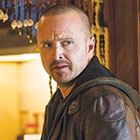
This weekend, millions who watched El Camino had a strange experience; they learned of Robert Forster's death just minutes after seeing the actor repeat his Breaking Bad role as a man who makes people disappear. Forster's Ed Galbraith runs a vacuum cleaner store in Albuquerque. It's an oversized space that's staged to make this medium-statured man look smaller and lonelier. He's chatting with a little old lady customer who doesn't want to ditch her loyal broken vacuum cleaner. "Why can't they build things that last anymore?" she complains. He replies, "Ah, you're singing my song." His next customer: Jesse Pinkman (Aaron Paul) is a scarfaced fugitive with a huge sack full of money. The young desperado tries to force the system of references » Read More

Our very world is the subject of the United Nations Association Film Fest, a10-day documentary fest appearing at various Palo Alto locations. This year's theme: "Scales of Justice." Here are the highlights. Chairman Winnie the Pooh is no fan of the multimedia artist Ai Wei Wei. At times, Ai's work is journalism as much as art. An example: China, 2008. The People's Republic concealed the number of casualties of the Sichuan earthquake, caused by the "tofu walls" of cheaply-built schools. Wei Wei and his apprentices hunted down the names of the 5,000-plus dead and broadcast them over the radio. This describes some of Ai's recent projects, in particular a site specific work at Alcatraz. (Oct 17). » Read More

Do the 23andMe on Todd Phillips' Joker, and most of the DNA is from two Martin Scorsese films: Taxi Driver (1976) and King of Comedy (1983). King of Comedy's influence is clear in the story of a failed comedian. On the Taxi Driver side, we find the influence scriptwriter Paul Schrader brought in from Robert Bresson, a master of austerity. What if Joker had been a movie about a man imploding instead of exploding? Instead of an Au Hasard, Balthazar, Au Hasard, Joker about a man with laughing sickness, stuck in the worst city in the world--a million bleak tenements rimming an erupting volcano of garbage. There'd be no "cathartic violence" to allow the wretched Arthur Fleck (Joaquin Phoenix) pass for anything but a doomed antihero. » Read More
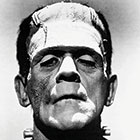
Universal's monster movies may be slow and theatrical. But just as today's White Claw guzzler is tomorrow's finicky martini sipper, the darkness and stillness of these films will one day lure new fans away from gory pop-ups. On the screen of the nearly century-old Stanford Theater, they still have the power of nightmares. William Henry Pratt was a kindly British gent. The mists of German Expressionism, chased away by the Nazis, coalesced in Hollywood and shrouded Pratt. He took on the stage name Boris Karloff and created some of cinema's most uncanny, undead characters. Mummy (1932), and the Lurch-like butler in 1932's The Old Dark House (the model for the Addams Family) were famous roles. But Karloff's signature piece was Frankenstein » Read More
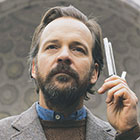
An insular and sometimes attenuated tale of New York, Michael Tyburski's The Sound of Silence begins with a piece of elderly newsreel. We witness a first measuring of noise levels in Times Square with audio equipment sometime in the 1930s, conducted by a group of men in three-piece suits and hats. Early on, they recognized a most invasive part of city living: the racket. In our time, Peter Sarsgaard, buttoned-down and with a beard to scratch, is Peter Lucian. He's a hermetic figure who calls himself a "house tuner." Lucian works on the sonic feng shui of Manhattan apartments. On the first case we see him crack, he ignores the pounding bass that leaks through a customer's walls from a neighbor's apartment. » Read More

As the actor and singer Judy Garland, Renee Zellwegger is held in tight closeup: a bundle of nerves dosing herself with pills, mouth crooked and trembling, wincing from cigarette smoke and bad memories. Half the time in Judy, she knocks you out, half the time you want to knock her out. Starved down to a shadow, Zellwegger's bag-of-bones Judy is a wraith in her final year working. It's 1968 and the 47-year-old is a huge star in London. She is tortured by insomnia and her vast need for love. Her personal life is in smithereens; back in L.A., her ex-husband Sid Luft (perennial rotter Rufus Sewell) is trying to get custody of her two young children. Meanwhile, she's courted by Mickey, a persistent younger man (Finn Wittrock) of such » Read More

Purple is the color of mourning throughout much of the world. Justin Chon's acute Ms. Purple is a character study of Kasie (an affecting Tiffany Chu), an Angeleno who works as a doumi at the luridly neoned karaoke bars in Koreatown. "Doumi" translates as "helper." What it means in practice is hustling soju, standing in a line-up with other hostesses and dealing with drunk, grabby businessmen. Kasie makes money for the upkeep of her dying father (James Kang), whose wife left long ago. When her skidding brother Carey (Teddy Lee) turns up, there's a tentative reconnection between the estranged siblings. » Read More
He has one nerve. The story twists it. Roy's father, Clifford (Tommy Lee Jones), was a renowned astronaut who abandoned his family for a one-way ticket into Neptune's orbit. Now, inexplicable pulses from that sector of the solar system are zapping Earth, killing tens of thousands. Perhaps it's from the anti-matter generator Clifford took with him. Has the old man succumbed to space madness? In one last gamble, the command sends Roy to Mars to broadcast a secret personal message to Clifford. They've prewritten it for him. Heart of Darkness parallels increase as Roy travels. Via endless first-person narration, we learn that the moon has been turned into a tourist destination, complete with an Applebee's. » Read More

Andy Muschietti's It Chapter 2 is a textbook "getting the band back together" movie. Twenty-seven years later, we re-meet the Loser's Club, that group of small-town rejects who sent Pennywise the Dancing Clown back to hell in 1989. As children, they swore a blood oath to return if the monster ever revived. Now the six are recalled to action by Mike (Isiah Mustafa taking over for Chosen Jacobs). Mike stayed put at the hellmouth in Derry, Maine, living above the public library and studying the multi-formed horror. Turns out the local Native Americans knew him all too well, long before It (Bill Skarsgard) materialized in bad clown form: wall-eyed, needle toothed and with a bulbous forehead upon which the make up has cracked like rotting » Read More

Emptied by grief, Theo grows into a sort of replicant: three-piece-suit wearing and poreless, with a job peddling dodgy colonial furniture. Enter the supercilious blackmailer, Denis O'Hare, who knows all of Theo's secrets. The villain describes Theo's furniture as "Frankensteins," since they're cobbled together from various sources. Roger Deaken's photography is rich, but it's not a putdown to say The Goldfinch itself is Frankenstinian. Here are elements of Great Expectations joined to Ripley's Game with some Arthur Miller at the finish. Mostly the film copies Dickens' approach to mysterious bequests, lifelong guilt and sudden reversals of fortune, in a sprawling tale that John Crowley (of Brooklyn) keeps engrossing, but never completely » Read More

We await an essayist like Robert Warshow (1917-55) who could defend the wave of superhero movies against the kind of reductive criticism that claims "they're all fascist," then drops the mic and calls it a day. Warshow's "The Study of Man: Paul, the Horror Comics, and Dr. Wertham" took a stance against the crusading psychiatrist Wertham, who loathed comics. As Warshow noted of the doctor: "Discussing Superman, he suggests that it wouldn't take much to change the 'S' on that great chest to 'S.S.'" They have their points, those who'd get bored or who'd rather not treat four-color characters as if they were Jungian archetypes. Still, it's surprising what compulsively watchable, dirty fun Amazon Prime offers in The Boys. It's a popular » Read More
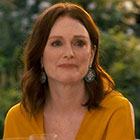
Julianne Moore, brave as a lion and as subtle as a serpent, is my favorite actress who isn't named Stanwyck. After the Wedding defeats Moore, yet she gives this stodgy adoption-melodrama a good fight, with sudden surprising moves and pivots. It's a remake of an Oscar-nominated 2006 film by Denmark's Susanne Bier. Director Bart Freundlich switches the genders. It's not Mads Mikkleson running an orphanage in India this time, but Michelle Williams' Isabel. She's first seen hooded like the Virgin Mary, bindi on her forehead, leading a group of a dozen cute kids in meditation. News comes from New York that a grant Isabel sought may be withheld. She must travel there to meet with the philanthropist, the self-made media tycoon Theresa (Moore). » Read More
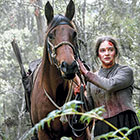
Hawkins slaps her and throws her across a table; later, she's subjected to a cabin invasion in which she loses everything. The assaulters are traditional grindhouse thugs: Hawkins the brute leader, Ruse (Damon Herriman) the slavering follower and one scaredy-cat (Harry Weaving, Hugo's son) who snivels in terror. After he leaves her for dead, Hawkins seeks to cross the unpacified island overland to get to a northern garrison town. He hopes to outrun the bad news that might cost him a promotion. He hauls his vile soldiers with him, as well as an elderly native guide and a small parcel of yokels in shapeless hats. » Read More
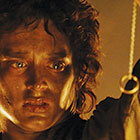
We're just several months away from a new decade, which is one reason Peter Jackson's Lord of the Rings (2001-03) trilogy will soon be considered old, no matter how vividly the films are etched in the memories of those who last saw them on a big screenÉ almost 20 years ago! What sticks in the mind is more than just the groundbreaking technology and CGI, which allowed Shelob to crawl, or the walls of Mordor to glow radium green, or the hosts of orcs to rise from their pits by the thousands. Human images shuffle through the mind, even if the audience almost took the amazing synthespianism in stride. (One kept forgetting that Andy Serkis' fishy Gollum, that Peter Lorre-worthy wretch, wasn't real.) It isn't really the battles that stick; it's » Read More
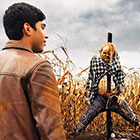
Scary Stories... works up an unusual amount of feeling, right where you'd least expect it. Dean Norris, who played the DEA cop Hank on Breaking Bad, only has a couple of scenes as Stella's father, yet he's quite touching as a man abandoned, shut off and overworked. The comedy always works, and the art direction is evocative right down to the wallpaper. The cast are far more than the usual cyphers fed to the meat grinder, and there is a sense of loss in almost every supernatural attack. Garza, who has the natural sensuality of Sal Mineo, is impressive here. As for Colletti, she's wonderful. It is a bit hard to imagine a young lady of her age having a lobby card for Mesa of Lost Women, just like it's hard to imagine people applauding » Read More

Gottsagen's Zak introduces himself: "I am a Down's Syndrome Person." He's stubby, stubborn and hard to handle. Zak is a fan of professional wrestling and one wrestler in particular, the Salt Water Redneck (Thomas Haden Church) who he watches repeatedly on a VHS tape. This obsession spurs his plan to flee the North Carolina old folks home where he's being kept. He gives staff the slip with the help of his roommate, Bruce Dern (doing some superior codgering, he's infectiously amusing). Zak flees at night in his underwear, stowing away in the boat of another fugitive, Tyler (Shia LaBoeuf), a hard-luck crab poacher with a couple of bad bastards (John Hawke and Yelawolf) after him. » Read More

You tour it and see messages begging forgiveness, letters to the dead, tokens of lethal diseases survived. Kaiser's two words are a gesture of apology for her time at CA. She is at times as enigmatic as Elizabeth Holmes, and despite her denial, potentially the conduit between Wikileaks and the Trump campaign. Sometimes you end up swearing at the screen because of her purblindness. Admittedly directors Karim Amer and Jehan Noujaim try to make this political turncoat more mysterious, by concealing her back story until the end of the film. Kaiser went from Obama intern to snuggling with Kellyanne Conway. No matter what Kaiser's loyalties are, she ultimately did her part to shift the 70,000 voters in three states who decided the 2016 election. » Read More

Tarantino isn't alone in toying with history. In Charlie Says (2019) director Mary Harron included a fantasy of Leslie van Houten (Hannah Murray) saving herself from lifelong imprisonment. Charlie Says ought to become a companion piece to Once Upon a Time in... Hollywood, as it emphasizes the plight of the actual Manson girls. Plus Harron burrows into the LSD-drenched eschatology of Manson (Matt Smith, excellent) with his gabble of race war, and the coded messages he deciphered in The Beatles "White Album." Poor Charlie, born 30 years too soon for QAnon. » Read More
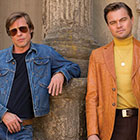
The movie dreams of LA 1969, in a heatwave winter and half a year later during the fateful weekend of Aug. 8-9. It admires open freeways, brushy hills, blazing movie marquees, and colossal advertising signs that seem to flaunt every zoning law. One of several rhapsodic driving scenes has Cliff Booth (Brad Pitt) crossing the San Fernando Valley at night. Coming up on his right is something that looks like a hallucination: a giant glowing blue X. Old Angelenos recognize this wonder as the delft-blue windmill from a Van de Kamp's coffee shop, its blades 20 feet long. » Read More

In Maiden, A documentary about the first all-female yacht crew to participate in the Whitbread Race, the emotional state of the ship's captain takes center stage. The camera stays with the Maiden's skipper, Tracy Edwards, now 56. The tears come, as she tries to compose herself. She apologizes, tells the director she promised herself she wouldn't break down. This movie tries to make you cry. And, it often succeeds. The 1989-90 Whitbread Race was a serious undertaking: 167 days long and 30,000 nautical miles in six stages. First, the voyage from The Solent to the coast of Uruguay. Then, around the Cape of Good Hope, where the racing yachts skirt icebergs off Antarctica's coast, taking advantage of the speed granted by the gales of the » Read More
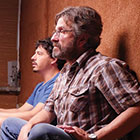
A harmonious blend of mumblecore and screwball, Lynn Shelton's Sword of Trust touches both poles: nowheresville cinema-of-disappointment meets millionaire ex machina. Despite the ambling pace, here is the self-deception of frantic 1940s comedy. Shelton (Humpday, My Sister's Sister) demonstrates a light touch that compliments the shagginess of her methods.One influence seems to be Pawn Stars, a popular but baffling TV show where people bring their treasures to be priced, knowing in advance they're going to be buffaloed and low-balled in front of the cameras. But like a sword, a movie ought to have a point, and this film's essence is the serious problem of historical misinformation. » Read More

Six days of eclectic documentaries, biopics, comedy and drama: The Palo Alto leg of the S.F. Jewish Film Festival features more than two dozen films. Take the Israeli-made Golda, the kind of honest discussion of Israeli history rarely permitted in American media. Golda Meir was the Kiev-born, Milwaukee-raised woman who served as prime minister of Israel from 1969-74. The documentary shows not just Meir's toughness but the suspiciousness and intractability that permitted both international assassinations and a questionably prosecuted war. She also refused to do much for the North African Jews known as the Mizrahi. By the time Meir died, a political relic, she'd set the stage for the ineffable Benjamin Netenyahu, the subject of the » Read More

San Francisco is nothing but a series of steep hills that people cling to until the gravity gets them. The Last Black Man in San Francisco is a remarkable film in the way it evokes that downward pull. It's all about a dispossessed young man and the best friend who lives with him and studies him. Jimmie Fails (played by Jimmie Fails) was homeless for half his life. He's obsessed with a Victorian house on the edge of the Fillmore; he surreptitiously tends to it, lovingly painting the windowsills even as the current tenants pelt him with fruit from Whole Foods. He's crashing in Hunters Point, sharing a small house on a hill underneath the Sunnydale projects with his close friend, Mont (Jonathan Majors), and Mont's blind grandad (Danny » Read More

In the style of Aster's previous female-fronted film, Dani (Florence Pugh) is a central focus of Midsommar. Pugh is a delight, whether she's dancing around the Maypole for hours or sobbing until she faints. Pugh makes Toni Collette's performance in Hereditary seem mild by comparison, conjuring a character so riddled by loss and pain that one can't help but become emotionally invested in her well being. Midsommar is absolutely petrifying and definitely has the upper hand on Hereditary, with a faster pace and generally more explicit moments, including a rather efflorescent sex scene. Aster isn't concerned with censoring the graphic parts of his films, throwing viewers head first into the carnage. His films thrive off of shock factor; hence, » Read More
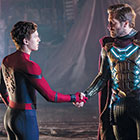
After this squire lost his knight, Peter Parker (the eager and charming Tom Holland) longs to be the 16-year-old neighborhood hero he once was instead of an Avenger. It being summer, he's slated for a school vacation taking in Europe's most decorative capitals. This'll give him a chance to court the brown-eyed and diffident Mary Jane; his comic relief buddy, Ned (Jacob Batalon), advises him to play the field: "We're American bachelors!" Familiar teenage summer-vacation stuff ensues among the canals and the castles, with Curb Your Enthusiasm's J.B. Smoove and Martin Starr as the inept chaperones. Parker draws the attention of new mentors: good cop (Jon Favreau's Happy Hogan) and bad cop (naturally, Samuel L.) Off to Venice, Prague and » Read More

Back in his Trainspotting days, Danny Boyle might have agreed with The Clash: "Phoney Beatlemania has bitten the dust." As the older, richer film director of Yesterday, he's venerating the dusty mummy. Audiences accept that a big purple extraterrestrial bugger can snap his fingers and evaporate half the universe. They shouldn't balk at Yesterday's premise: all the electricity in the world winks off for about 10 seconds and when the lights come back on, all the world's knowledge of The Beatles has evaporated, except in the mind of Jack (Himesh Patel), an unsuccessful guitar player and warehouse stocker in a placid Suffolk seaside town. He uses his memories to go straight to the top, with the help of Suffolk singer-songwriter Ed Sheeran » Read More

Another new angle: this Chucky is more sinned against than sinning. The doll's good/evil switch was flipped the wrong way by an abused Vietnamese slave laborer. Chucky and his little boy keeper Andy (Gabriel Bateman) live in the slums, and this too warps the impressionable little homunculus. The castle-like Gothic apartment building in Chicago is, in this Vancouver-shot version, poor, dim and sordid. The halls look like someone left a smoke machine running. The colors are a soupy brown, though patches of tropical Mario Bava-style colors glow from reflected neon in the backgrounds. » Read More

The name Ophelia, swiped by Shakespeare from an obscure Italian versifier, derives from the word "Help." The movie Ophelia needs it. In this retelling of Hamlet, from the point of view of its sacrificial lamb, the young commoner Ophelia (Daisy Ridley), bullied by mean girls at Elsinore, has a romance with the young Prince Hamlet (George MacKay); it's right before he leaves for college, and then later after he returns to the rotten court. Ophelia is not an underwritten part, but Queen Gertrude is (at least according to Kenneth Branagh). As played by Naomi Watts, the queen is in on the regicide from the beginning. This Gertrude has a 'tude--she's haughty, and intoxicated on some mysterious tonic she imbibes. » Read More
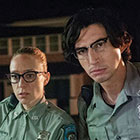
Like the zombies here, Jim Jarmusch's The Dead Don't Die is dead on its feet and ambling toward no clear destination. The existential nonchalance of his many films (Down By Law, Only Lovers Left Alive, Patterson) harmonize nicely with love stories of bemused, alienated characters. It doesn't quite work with horror-show material. Horror doesn't seem to interest him that much, except in a phantom limb sort of way, as in the tingle of remembering the thrill of late night movies decades ago. Thus the references here to Creepy magazine and Cleveland TV horror show host Ghoulardi, honored in both image and taglines ("Stay sick!" "Turn blue!"). Jarmusch is shooting in the Hudson Valley of New York. The terrain looks reasonably like the rural, » Read More

The Man from Laramie (1955) and The Naked Spur (1953), two of the best westerns Stewart made, are screening at the Stanford Theatre. In the former, he's a hired hand on a mysterious trail of vengeance; in the second, he's a manhunter, whose latest prisoner (a diabolical Robert Ryan) may be his last. As visually rich as they're morally complicated, these are two examples of the war-seasoned star on his way to the lethal honeytrap Hitchcock had waiting for him in Vertigo. Toy Story 4 has the wings and claws of a great melodrama. Nobody today can drill into childhood trauma like Pixar. In this conclusion, Woody is a man out of time, obsolete and relegated to the dusty closet. He salves his dignity by protecting a tenderfoot toy his » Read More

The ways of Netflix are hard for mortals to understand. Not just the mysterious nature of their ratings and the secret of how many people are watching, but the constant element of surprise. Take the no-comment drop of The Lonely Island's "visual poem," The Unauthorized Bash Brothers Experience. It's allegedly a video rap record done by baseball's Jose Canseco (Andy Samberg) and Mark McGwire (co-director Akiva Schaffer), heroes of the Oakland Athletics in the 1980s. Naturally, the auteurs of SNL's "Dick in a Box" go straight for the crotch, with a sheaf of autotuned, shouted-out forced rhymes about shrunken junk and renal disease from anabolic steroids: "Kidney failure's just part of the game!" » Read More
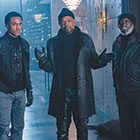
It's supposed to be about a black private dick, not a shtick about his privates. This catastrophic reboot insists that we won't know NYC detective John Shaft is a bad M.F. unless he talks about his magnum every six seconds. Barbershop excepted, director Tim Story has never made anything like a good movie. He's studied the inside of Kevin Hart's howling mouth in two Ride Along pictures (the third is due presently), and helmed two dismal Fantastic Four opuses (2005, 2007). Here he's re-rebooting a super-detective franchise from the 1970s, starring the imposing Richard Roundtree, which was successfully redone by the late John Singleton in 2000 with Samuel L. Jackson in the lead. Detective movies take care of themselves; Jackson tooling around » Read More
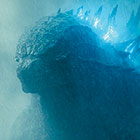
What's killing the cinema, No. 448 in a series: not enough exclamation points in titles, a clear proof of lack of confidence. And bring back shiny subordinate clauses. Dracula, Prince of Darkness has far more heft than plain old Dracula. The very title of Godzilla, King of The Monsters has brio that makes up for Michael Dougherty's bewildering direction. The who, what and why isn't just out the window, it's over the hills and far away. Sizable info dumps are required because of links to Godzilla (2014), and there's more cast than anyone knows what to do with: Sally Hawkins and David Strathairn stand around like guests who don't know anyone at the party. » Read More
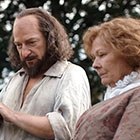
It is 1613: the Globe theater is destroyed by fire during a production of Henry VIII (also titled "All is True"). Shakespeare (Kenneth Branagh) leaves London to go back to the small town he was raised in. His wife, Anne Hathaway (Judi Dench), has been doing fine without him during his long absence. She buried their 11 year old son, Hamnet, without the help of her husband. The writer has two daughters; the angry, unmarried Judith (Kathryn Wilder) and her sister, Susanna (Lydia Wilson), lovelessly married to a puritan. (Branagh underscores the irony that this son in law, whose faith demanded the closure of the theaters, was Shakespeare's heir.) As the Bard endures the anger of his family, he receives a surprise visit from his former patron, » Read More
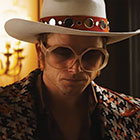
So Rocketman commences with Elton John (Taron Egerton) dressed in a pomegranate-hued devil costume, striding toward a circle of metal folding chairs. In recovery you're supposed to be anonymous. Elton is there to state his full name, and confess his polydrug abuse and sex addiction. The addicts hang on his words. One asks, "What were you like as a child?" Not that question! A lonely prodigy in the London suburbs, that's what, complete with an ice cold dad (Steven Mackintosh), and straying, withholding mom (Bryce Dallas Howard in a role Gemma Arterton would have improved). Young Elton (Matthew Illesey) sings "The Bitch Is Back," not a song one associates with 10-year-olds, to a crowd of dancing 1950s neighbors in a cul de sac. This lost kid » Read More

Harron's film gets the milieu, the angle and the details right. To properly tell the story of the Manson gang, one needs a certain fellow feeling for the hippies. Without compassion for a life of flamboyant laziness, the Mansons will seem incomprehensible, some unique Southern California plague like pet-eating coyotes, brushfires and the Santa Ana winds. Harron's sympathy for devils was previously seen in her much-praised adaptation of American Psycho (2000) and I Shot Andy Warhol (1996) about the polemicist and street-lunatic Valerie Solanas. Charlie Says is more thoughtful work, less studiously hip than its predecessors. » Read More

In flashbacks we see Joan's youth at Cambridge in the late 1930s; played by the pretty but uninvolving Sophie Cookson, she was a drab science student who got swept into a friendship with a dashing older student, Sonya (Tereza Srbova), and her brother Leo (Tom Hughes). The pair of dazzling foreigners are ardent Communists who try to recruit Joan into the party. Over the course of many decades, Joan is mixed up with them, carrying on an affair with Leo that lasts into the war years. Matters get troublesome when Leo presses Joan to spy for the Party; she's now an assistant to a research scientist (Stephen Campbell Moore). Her boss loves her, but he's trapped in one of those Graham Greene escape-proof marriages. » Read More

The film documents a 1,900-mile journey from the shoulder of Texas to its toe at the Gulf of Mexico. Five travelers follow the Rio Grande, America's fourth largest river. It's just one front for the proposed "big, beautiful wall." According to this gloriously photographed study, only 3 percent of Texas is publicly owned. Most of that is in Texas's Outback, the Big Bend region. It is titanic country, 800,000 acres of open land. It's remote, often tractless, a place to stir the soul of anyone who loves a Western movie. The area is so rugged that it has to be seen just so that the wall can be laughed off properly: vertical cliffs facing each other hundreds of feet above the river, mesas, box canyons and bluffs. Says Masters: it's "like the » Read More
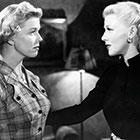
In his autobiography Day's sometimes-costar James Cagney noted, "After Love Me or Leave Me, Doris went into those Pillow Talk things, and I for one have always considered that a hell of a waste." Day made big money in froth: Tea for Two (May 1-2) is No No Nanette under a different cover; Move Over, Darling (with James Garner, May 17-19) is a remake of My Favorite Wife, and My Dream is Yours (May 8-9) is highly sticky, despite a guest-starring Bugs Bunny. But Day has a range that defies the predictability of her early 1960s hit-making days, as seen in the Stanford Theatre's well-programmed retrospective. More than a few, such as The Pajama Game, are unavailable for streaming. » Read More
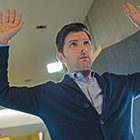
The biggest disappointment is an episode giving itself 10,000 feet more importance than its William Shatner-starring inspiration. In "Terror at 30,000 Feet," the interestingly surly Adam Beach is a journalist who hears a future podcast describing how the plane he's aboard is doomed to crash. He seeks the usual suspects aboard: Muslims? Russian gangsters? While the paranoid state of America in 2019 is a good starting point for a tale of terror, director Greg Yaitanes can't get us into the mood of fear. Maybe the point is that the jet is flying smoothly and that the trauma is all in the passenger's mind--like Trump's crises, it's all in a man's head. But unless you worship Lost as a marvel of narrative, the punchline is abject. » Read More

Hurtling toward a black hole at nigh-light speed, a spacecraft known only as "7" is in the middle of an eight-year mission. The outside of the craft is blandly boxlike. Inside, it's crappy, exactly like the littered hall of a public housing apartment. Claire Denis' High Life, and yes, the title is ironic, begins with two survivors aboard. Monte (Robert Pattinson) is repairing a magnetic shield outside the craft, while baby-monitoring the wails of a yearling girl fussing in her makeshift playpen. When not tending to the babe, Monte is recycling his urine, or hauling the scraps of his meals in a dingy plastic bucket to the indoor compost heap. » Read More
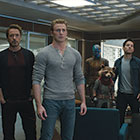
This massive cycle is a feat of cinematic engineering for which there is no parallel. Completing it, the Russo Brothers use their three hours not just for the usual battle royals, last stands and self-sacrifice, but also to capture the mood of a grieving Earth. As the least respected member of the team, Ant-Man, Paul Rudd does the great old Ebenezer Scrooge at the graveside scene, seeing his name on a cenotaph to "The Vanished" in Golden Gate Park. Survivors have moved on--Stark (Robert Downey Jr.) has also resettled in the country with wife Pepper (Gwyneth Paltrow) and child; Mark Ruffalo's Bruce Banner, no longer bifurcated, but a scholarly Hulk with glasses, signs autographs for the kids who tug his sleeve. » Read More
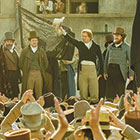
It's clear that Mike Leigh intended Peterloo, the story of an 1819 massacre of unarmed working people, as his magnum opus. In High Hopes, Naked and Vera Drake, among many others, Leigh has made unparalleled studies of the British class war through deep focus on the combatants, creating characters through improvisation and intensive rehearsal. He is a treasure, and has no parallel in America. In Peterloo, a historical drama of some 20 or more characters, Leigh tries for a working class epic. But it's a tough business trying to match the intensity of, say, the Corpus Christi scenes in Roma or that landmark for staging political violence on screen, the Odessa Steps sequence in Potemkin (1926). » Read More

She has a part-time career as a midwife: "Look at me," she orders a woman at childbirth, laying down next to her, trying to get her to work through it. Her father Daniel (Denis Menochet) wants her to marry an established widower. The unwanted marriage causes the girl such torment that the community decides she's possessed, forcing her into a watery exorcism at night. Alone and despondent, she meets a wandering rabbi familiar to us all. He comforts her, telling her he knows she doesn't harbor demons. » Read More
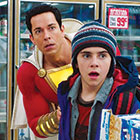
When Billy utters the magic word "Shazam," a lightning bolt changes him into Earth's Mightiest Mortal: a hunk played by Zachary Levi, the Jewish prince physician on Marvelous Mrs. Maisel. This new Shazam is a novice superhero who doesn't even know his own strength, despite the coaching from his foster brother Freddy (Jack Dylan Grazer). The boy is a motormouthed reject who treasures a bullet flattened from the chest of Superman himself, complete with certificate of authenticity. Why this figure is called Shazam instead of Captain Marvel, as he was in the 1940s, is a long and boring story of copyrights, easily explained on the Internet. The Swedish director David Sandberg brings a ponderous, antiseptic touch to this adventure with plenty of » Read More

Welcome to another episode of Bad Hair Theater: Kim Nguyen's The Hummingbird Project, which played at this year's Cinequest, is a moral drama that illustrates the physical effects of bad behavior. If we do wrong, it will be reflected not just in our faces but in the very hair upon our heads. The rackety NYC schemer Vincent (Jesse Eisenberg) wears a kind of Mark Anthony toupee with bangs. His cousin Anton (an often-droll Alexander Skarsgard) is a bundle of panic and obsessions, and these anxieties apparently triggered a case of male pattern baldness. Michael Mando, who plays the fearsome Nacho on Better Call Saul, is Mark Veg, a drilling expert whom the other two have hired on their secret project to make billions. As usual, Mando has done » Read More

Driving around France, Varda visits the camps of migrants and squatters. They root through a potato field where spuds too big or too small have been left behind by the harvesters. She also finds a family of singers, helping themselves to the grapes of an abandoned vineyard. To explain the legal rights of such potential trespassers, she brings in robed, lace-jaboted advocates. (Varda wonders if the well-off who go in for gleaning in the fields could count as legally "needy," to which a lawyer replies, "Yes. They are needy. They need to have fun.") As Varda interviews the poor at the turn of the millennium, she makes a case that gleaning is a rebel's duty, a way of fighting the waste and planned obsolescence built into the system. » Read More
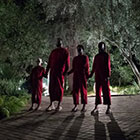
Break out your decoder rings; the flawed but intriguing Us's political subtleness is hidden by its straightforward terror. Among other things, Jordan Peele's follow up to Get Out breaks a long drought. Santa Cruz, with its deep cold bay and hoodooed mountains, ought to be California's Transylvania. Instead, it's remembered for The Lost Boys, which is just The Goonies wearing plastic vampire fangs. There hasn't been a good movie made there since Killer Klowns from Outer Space (1988). Now the curse is lifted, even if much of Us is shot in a lake in the San Bernardino Mountains. » Read More

Aside from some gross racial caricaturing; the original Dumbo (1941) is an unusually hand-made cartoon. Here in 64 minutes is not just the elephant child's tragedy at being separated from its mother, but the sweat and stink of a circus, and a squad of clowns who are dangerous and really know their business. In the magnificent "Pink Elephants on Parade" sequence, the animators went after the pretensions of Fantasia, with strobing color and surrealism. It's the rare instance of Disney being as funny as a Bugs Bunny cartoon. » Read More

The script by Wyatt and his wife Erica Beeney doesn't center around the usual young adult-lit style hero, with one brave warrior giving hope. Rather, the rebels are odd types: nurses, teachers, whores and street criminals, prepared not be taken alive. The aliens monitor all broadband, so the resistance uses analog technology: reel to reel tapes, carrier pigeons, typewriters, and secret messages hidden in cigarette papers. We're lured into the story through a we-are-the-dead set of lovers, like Winston and Julia in 1984. In the nighttown slums of Pilsner, a Chicago suburb, sex worker "Jane Doe" (Vera Farmiga) has luxuries, a record player and a vase of fresh cut flowers. Her trick is the secret policeman William Mulligan (John Goodman). » Read More

Brie Larson's brown-eyed and appealing underplaying sells this material, which isn't the freshest. She is called "Vers," an amnesiac soldier of the outer space Kree empire, with the ability to blast photon rays from her fists. The power is a gift from the Empire's all-highest, an AI simulation that appears to her in the shape of Annette Benning. Vers has a rep for being too unfocused and emotional, as she's always reminded by her superior officer and sparring partner (Jude Law). After a skirmish, Vers is captured by the pointy-eared Skrulls. Her dormant memories are stirred up during an interrogation by their diabolical leader, the Cockney-accented Taros (an amusing Ben Mendelsohn). » Read More

Elle Fanning's debut wasn't auspicious; at age 3 she played the young version of Sean Penn's daughter in I Am Sam (2001) wherein Penn played a mentally challenged man trying to adopt a child. Penn got an Oscar nomination, but the film is destined to be remembered forever as the subject of a four-word rule, as stated by Robert Downey, Jr. in Tropic Thunder (2008). Just as one loves too wisely and not too well, one can act too dumb. But Fanning has been smart, and her poise has been remarkable for someone of her years. Consider the regret she brought to Super 8 (2011), where she played an Ohio steel-town girl pinched by sorrow, one of the better recreations of a '70s youth in a modern movie. » Read More